Real audits. Same rigor, every industry.
From industrial technology to enterprise infrastructure to regulated insurance, the same audit framework surfaces the same categories of revenue leaks — because fragmented funnels, invisible pages, and abandoned leads don't respect industry lines. It starts with WOW!, where Todd turned digital into the primary revenue engine of a $1B+ broadband provider. The client audits that follow are real engagements; their company names and identifying financial figures are withheld under client confidentiality, but the diagnoses and roadmaps are real.
One in-house transformation and three anonymized client audits. The same method has been applied across B2B, B2C, and D2C businesses in dozens of other categories.

WOW! Internet, Cable & Phone
Todd Lilienthal, Vice President, Digital Innovation & Experience
The Situation
WOW! is a publicly traded, federally regulated broadband and telecom provider, and during Todd's tenure it was the 6th-largest cable operator in the U.S. When he took over digital, it was a support function, responsible for just 3% of new customer acquisition while retail stores, the call center, and field sales did the selling. Over the next nine years the company went through a private-equity investment, a divestiture, and a take-private acquisition, so digital had to grow while the business around it kept changing. Strategy, P&L, and transformation updates went to the CEO, the C-suite, and the Board every quarter.
The Work
Moved digital from a support function to the company's primary sales channel. Every new digital offer was priced and positioned to grow the channel without taking business from retail, call-center, or field sales.
Owned the React-based customer account platform and ecommerce flow, used by hundreds of thousands of customers every month. Customers could order, upgrade, change services, pay bills, and get support with no agent involved.
Launched online upgrades in 2019 and optimized them until they processed more than 60% of all upgrade orders. The account platform also became customers' primary way to pay their bill.
Ran SEO, AEO, and GEO programs that grew organic traffic 106% and new customer orders 70%, with no increase in paid media spend.
Built an A/B testing program that lifted conversion rates an average of 39% per year and made data the deciding factor in what got built next.
Built and chaired enterprise AI governance and the AI Adoption Committee. Automation cut operating expenses 20%. Churn-prediction models flagged at-risk customers and triggered manual or automated outreach, lowering churn among them by more than 30%. AI forecasting made budgets more accurate in less time, and AI lead scoring was underway.
The Results
Digital revenue growth
Digital share of new customer acquisition
Organic traffic increase, zero added paid spend
More new customer orders
Of upgrade orders processed online
Lower churn among at-risk customers
Average annual conversion lift from testing
Operating expense reduction
Digital commerce built during this period created a new recurring revenue stream, and the digital customer support platform added recurring revenue of its own while lowering service costs. All of it ran with full departmental P&L accountability.
Why it matters for your audit: every Gigital audit and roadmap uses the same playbook that took digital from 3% to 37% of new customers here. Fix what's leaking first, then build self-service, search visibility, testing, and AI on top.
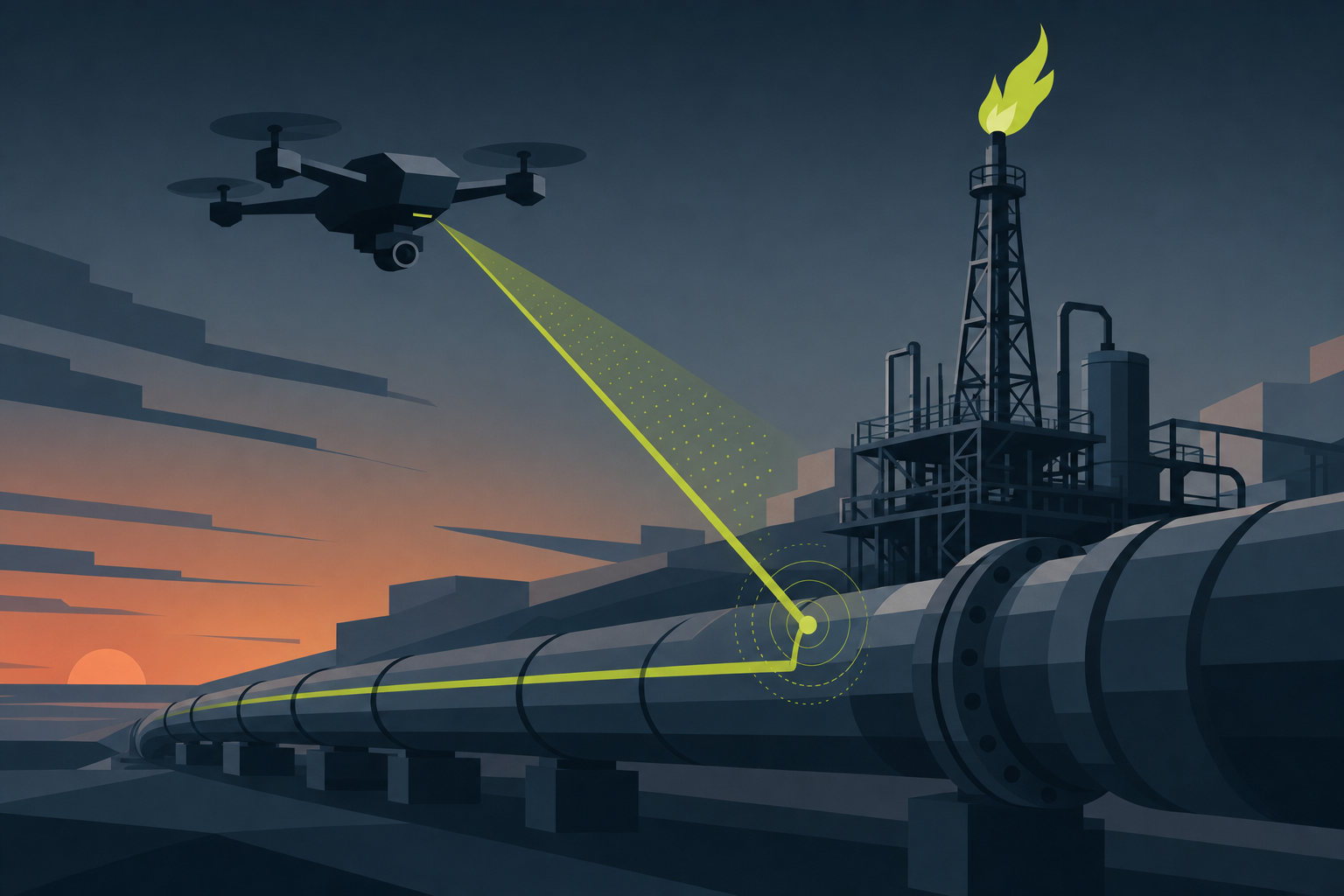
Drone Inspection & Analytics Platform
The Situation
A specialized industrial-inspection and drone-data-analytics company with nearly two decades of operating history and a genuinely strong proof story — hundreds of thousands of completed inspections, a customer roster including some of the largest names in oil & gas and utilities — was scaling toward a major corporate transition and heightened public-market scrutiny. The digital properties needed to hold up under a much brighter spotlight.
What We Found
Two autoplay hero videos over 12MB and 23MB were driving mobile page-load times past 30 seconds — losing the majority of mobile visitors before the page even rendered.
Zero AI-search readiness: no FAQ schema, no llms.txt, and a failing score on Google's own Agentic Browsing audit — meaning AI assistants effectively can't recommend the company at all.
A fragmented foundation — two separate domains, each with its own analytics container and lead form — splitting SEO authority and making it impossible to see a single visitor's full journey.
Generic six-field lead forms with no segmentation, no scoring, and no nurture track — meaning roughly 87% of leads not immediately sales-ready were simply abandoned.
Missing security headers ahead of acquisition due-diligence review — the kind of finding that raises unnecessary flags in a data room.
A large proprietary inspection dataset sitting completely unused as content — one of the strongest AEO/GEO assets we've seen, undeployed.
The Roadmap
A four-phase, highest-needs-first plan through the Ascent Framework: same-day header and media fixes in Phase 1; funnel consolidation, real scheduling, and activation of already-licensed intent tools in Phase 2; AEO/GEO content built from the proprietary dataset plus vertical personalization in Phase 3; and predictive scoring, an AI concierge, and a full trust center in Phase 4.
Targeted outcome: form conversion up 20%+ by end of Phase 2; measurable AI-citation visibility where none currently exists; both domains out of failing performance territory before the spotlight intensifies.
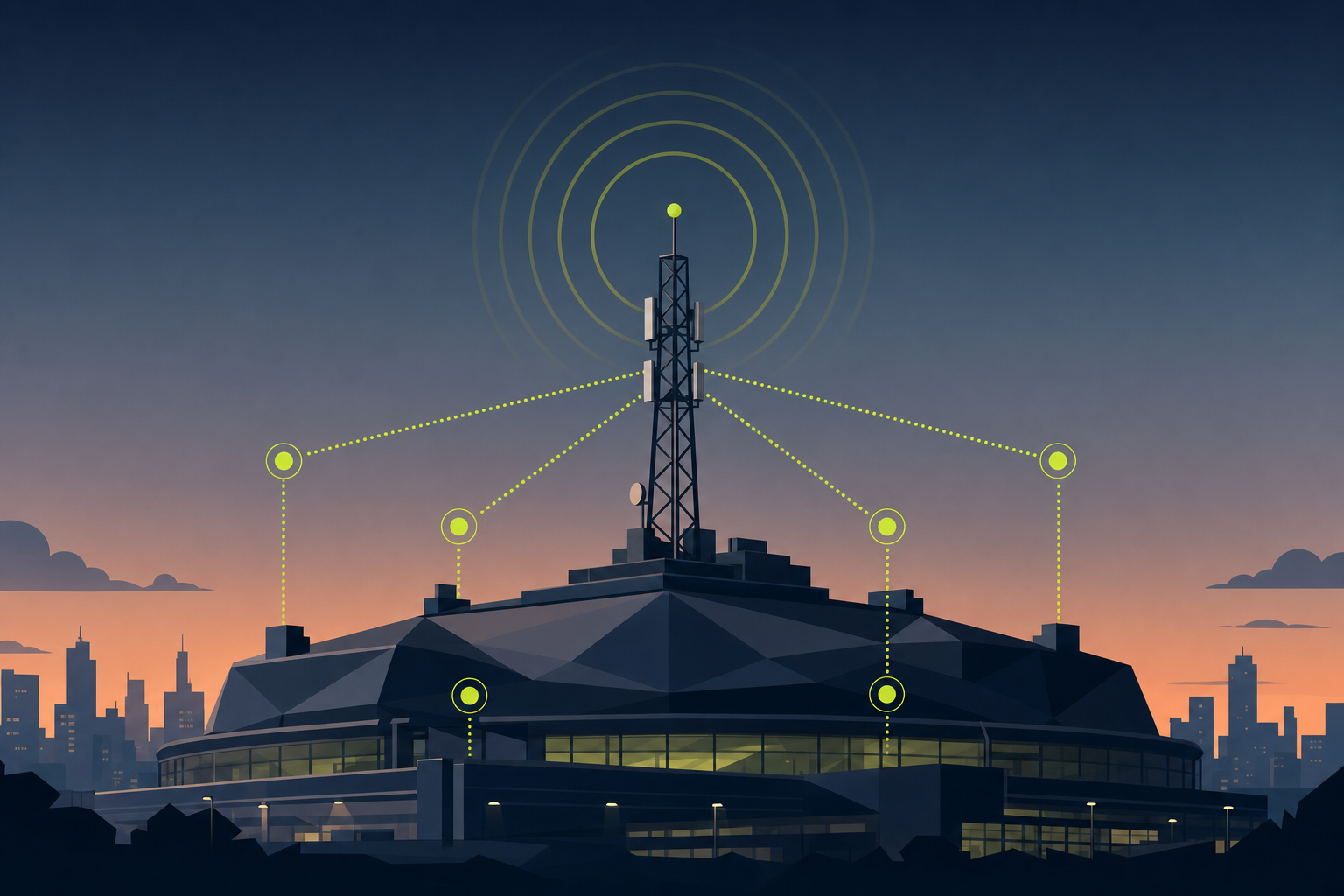
"4th Utility" Venue Connectivity Operator
The Situation
An enterprise infrastructure operator positioning itself as a "4th utility" for large venues and properties — nine years of operating history, institutional backing, named enterprise relationships, and recently closed investment-grade financing. The brand story was strong. The website was quietly working against it.
What We Found
Both the homepage and the contact page were tagged noindex, nofollow — the single highest-priority fix, and the direct explanation for missing brand-search visibility. Google literally could not show either page in results.
A launch announcement post from years earlier was outranking the homepage itself for the company's own brand name.
Zero security headers in place (F grade) — a real concern for enterprise buyers whose procurement teams run their own security reviews before signing.
Third-party script bloat — duplicate analytics tags (two returning server errors during live testing), plus unnecessary form friction — was driving mobile load time to 7.5 seconds versus 1.1 seconds on desktop.
A genuinely strong flagship case study existed but was buried — never promoted into a real, linkable case-studies section, and never turned into FAQ or schema-rich content.
The entire funnel relied on one static contact form — no phone-first CTA, no calendar booking, no mid-funnel offer for visitors not yet ready to talk to sales.
The Roadmap
Indexing came first — removing the noindex tags, fixing the canonical structure, and rebuilding internal links so the homepage could finally rank for its own name. From there: eliminate duplicate analytics, ship the six missing security headers, cut third-party script weight, and widen the funnel with a phone-first CTA, real scheduling, and a promoted case-studies library backed by FAQ schema.
Targeted outcome: brand-name search results restored to the homepage; mobile performance out of failing range; a security posture that survives enterprise procurement review.

Digital-First Insurance Agency
The Situation
A digital-first insurance agency built around automated renewal monitoring, licensed agents, and online quoting — a genuinely modern value proposition undermined by a website that was quietly losing most of its own funnel before a single quote was ever generated.
What We Found
Leads were only captured inside the quote flow itself — anyone who bounced before finishing a quote was lost entirely, with no email capture, no exit-intent offer, and no renewal-reminder opt-in to bring them back.
Testimonials used first names and dollar amounts only — no photos, no last names, no state, and no presence on Google Reviews, Trustpilot, or the BBB — making every trust signal easy to dismiss as unverifiable.
Real UX friction in the core flow: an unclosable "Retrieve Quote" modal, and a "Start New Quote" button that failed to display results for some users.
No live chat, SMS, or chatbot of any kind — a form-only contact model in a category where speed of response is a genuine conversion killer.
Agent bios showed first names only — no license numbers, years of experience, or credentials — thin credibility for a regulated purchase decision.
No analytics or experimentation instrumentation anywhere on the site — meaning every recommendation above had to be made without a single funnel metric to confirm it.
The Roadmap
Phase 1 of the six-month strategy centered on one theme: measure, fix, and earn trust. Full analytics and behavioral instrumentation went in first, alongside a trust-layer overhaul (verified reviews, real agent bios with license numbers and video intros), live chat, and new email-capture infrastructure — a renewal-reminder opt-in, an exit-intent offer, and a three-email drip for anyone who didn't finish a quote.
Targeted outcome: a lead-capture funnel that no longer discards every visitor who doesn't finish a quote on the first visit, and trust signals credible enough to move a genuinely cautious insurance buyer.